Emergency
Radiation Oncology - Types, Uses & Side Effects

Radiation Oncology - Types, Uses & Side Effects

Radiation oncology is a medical speciality that uses radiation therapy to treat cancer. Radiation oncology is one of the three primary specialities, the other two being surgical and medical oncology, involved in the treatment of cancer. Radiation therapy can be given as a curative modality, either alone or in combination with surgery and/or chemotherapy. It may also be used as palliative treatment, to relieve symptoms in patients with incurable cancers. Radiation therapy is performed in two different ways. One is through using a machine that produces a radiation beam to focus on the target area. The other type is called Brachytherapy where a radioactive substance is placed inside the body which emits radioactive energy to kill the cancer cells in the target area. 

What Is Radiation Therapy?

Radiation therapy is a process, which uses ionizing radiation (High-energy X-Rays/Electron) to treat cancers, tumours and other conditions. The radiation breaks up the DNA of cancerous cells in such a way that it disrupts their growth and further division. This way radiation kills the cancer cells which either prevent or slow down the condition. Radiation therapy is usually recommended in combination with other treatment methods such as chemotherapy, surgery, or both. 

Types of Radiation Therapy 

Radiation therapy is given in two forms depending on the type of cancer, its size and location in the body.

1: External beam radiation therapy

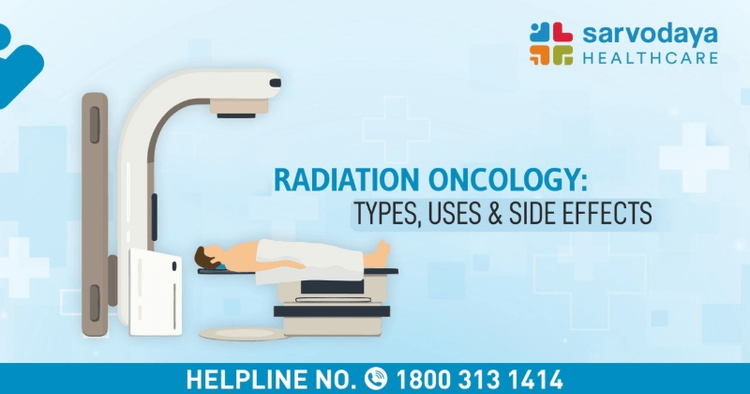
External therapy is the most used one, where an external machine emits a focused beam of high-energy ionizing radiation on the tumour from a distance. The External beam machine is large. It does not touch the patient, but moves around the patient and deliver a high dose of radiation to the tumour from different directions. External beam radiation therapy is a local treatment, so it only treats a specific part of the body. For example, for Ca lung, external beam radiation only treat the lung and chest area, not to the whole body. Different forms of radiation can be used through this machine depending on the treatment recommended. For example, high-energy X-ray beams are used to target deeply rooted cancers.

2: Internal radiation therapy/Brachytherapy

Internal radiation therapy is a treatment in which a radioactive source is implanted inside the body, in or close to the cancer-affected tissues. Brachytherapy is also a local treatment and treats only a specific part of the body. The implant emits radiation, which helps to kill the cancer cells. The implant can be temporary or permanent. This is done to limit the extent of radiation exposure to the healthy tissue surrounding the cancer cells. Brachytherapy usually recommends for treating cancers of head and neck, breast, cervix and prostate.

Radiation oncology specialists may recommend both types of radiation oncology treatment depending on the type, size, location of the tumour in consideration with the person’s age & overall health.

Uses Of Radiation Therapy

For some cancers, radiation therapy may be the only treatment. However, most often, radiation therapy is given with a combination of other cancer treatment, such as surgery, chemotherapy, and immunotherapy. Radiation therapy may be given before, during, or after these other treatments to improve the chances that treatment will work. The timing of when radiation therapy is given depends on the type of cancer being treated and whether the goal of radiation therapy is to treat cancer or ease symptoms.

When radiation is combined with surgery, it can be given:

  • Before surgery, to shrink the size of the tumour, so it can be removed by surgery and be less likely to return.
  • During surgery, so that it goes straight to the tumour without passing through the skin. Radiation therapy used this way is called intraoperative radiation. With this technique, the oncologist can more easily protect nearby normal tissues from radiation.
  • After surgery to kill any cancer cells that, remain.

Side Effects Of Radiation Therapy

While treating cancer cells, radiation beams can affect healthy cells too which causes side effects, although these depend on several factors such as the area receiving treatment, a person’s overall health condition, other cancer treatments, genetics, and other factors, such as smoking. Healthy cells that are damaged during radiation treatment usually recover within a few months after treatment is over. Side effects can be short-term & long-term.  

Short term side effects

  • Fatigue, nausea & vomiting
  • Hair loss or changes in skin
  • Diarrhea

Long term side effects

  • Heart or lung problems
  • Thyroid problems and hormonal changes
  • Possibility of early menopause

There are very slight chances of high radiation doses increase the risk of developing another form of cancer. Not everyone experiences long term side-effects. The side effects can usually be treated and controlled with advance treatment techniques like IMRT, IGRT, respiratory gating, SBRT and SRS/SRT. Side effects caused due to radiation therapy are not permanent.

At Sarvodaya Cancer Institute, our radiation oncologist work towards finding the best treatment modalities for the patients, after a detailed diagnosis with the latest technology.

FAQs

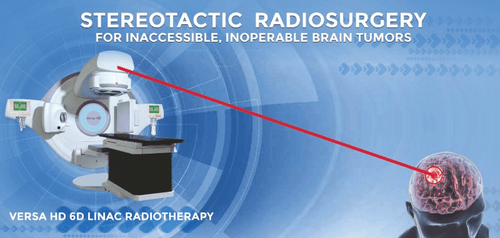
Radiation Oncology is a specialised field of cancer care that uses high-energy radiation to destroy cancer cells while protecting surrounding healthy tissues. Sarvodaya houses one of the most advanced Versa HD 6D Couch LINAC for high-end radiation therapies for soild, inoperable and moving tumours.
Radiation Therapy works by damaging the DNA of cancer cells, preventing them from growing and dividing, which leads to their gradual destruction. To understand in detail, consult a highly experienced radiation oncologist in Faridabad and Delhi NCR.

The different types of radiation therapy available at the best hospital for radaition therapy in Faridabad and Delhi NCR inclue:

  • Stereotactic Radiotherapy: Delivers highly focused radiation with sub-millimetre accuracy, ideal for treating small and hard-to-reach tumours.
  • FFF (Flattening Filter Free) Beam Delivery: Enables radiation to be delivered 4–5 times faster, reducing treatment time without compromising precision.
  • SRS & SBRT Therapy: Targets inoperable brain and body tumours with pinpoint precision, preserving healthy tissue.
  • IMRT & IGRT Therapy: Provides customised radiation doses with real-time imaging for continuous tumour monitoring during treatment.
  • Electron Therapy: Used for treating superficial tumours, offering better surface control and reduced deep tissue exposure.
  • Respiratory Gating Technique: Synchronises radiation delivery with breathing patterns, ideal for moving tumours in the lungs and liver.
  • 4D CBCT: Captures detailed, motion-based imaging to enhance treatment accuracy for tumours affected by movement.
  • TBI (Total Body Irradiation): Often used before bone marrow transplants to prepare the body by clearing out diseased cells.
  • HDR + VMAT: Combines high-dose radiation with rotational therapy to complete treatments in significantly less time.
  • HD Multi Leaf Collimator (MLC): Shapes radiation beams precisely to the tumour’s contour, ensuring better coverage and safety.

Yes, Radiation therapy when administered by the best radiation oncologist in Noida is a safe and well-established treatment. Modern technology like Versa DH 6D Couch LINAC ensures precise targeting, minimizing damage to healthy tissues.

Common side effects of radiation therapy may include fatigue, skin irritation, hair loss in the treated area, and temporary discomfort depending on the treatment site. If you notice any such signs, speak to your doctor promptly.
Each session of radiation therapy lasts about 10–30 minutes. Treatment is usually given 5 days a week for 2–7 weeks, depending on the case.
No, the procedure of radiation therapy itself is painless. Some patients may experience mild discomfort from side effects later.
In early stages, radiation therapy can help cure cancer by destroying the camcer cells. It is also used to control disease or relieve symptoms in advanced cases.

Radiation Therapy is commonly used for breast, prostate, lung, cervical, head and neck cancers, and brain tumours.

After radiation therapy, patients may feel tired for a few weeks. Side effects gradually improve, and regular follow-ups help monitor recovery and treatment response.
Dr. Dinesh Pendharkar | Medical Oncology,Haematology & BMT (Bone Marrow Transplant),Paediatric Oncology,Cancer Care,Genomic Oncology | Sarvodaya Hospital

Dr. Dinesh Pendharkar
Director - Sarvodaya Cancer Institute

Dr. Dinesh Pendharkar | Medical Oncology,Haematology & BMT (Bone Marrow Transplant),Paediatric Oncology,Cancer Care,Genomic Oncology | Sarvodaya Hospital

Dr. Dinesh Pendharkar
Director - Sarvodaya Cancer Institute

Speak to Our Health Expert

Get reliable medical advice anytime, anywhere.

Related Blogs

Debunking 10 Myths About Breast Cancer

Oct 06, 2025

Lymphoma Symptoms, Stages & Treatment Options

Sep 18, 2025

CAR T-cell Therapy: A Breakthrough in Cancer Care

Apr 11, 2025

The Future of Cancer Treatment: Precision Oncology

Feb 16, 2023

Questions That May Help Avail Better Cancer Care

Feb 16, 2023

A Guide To A Bone Marrow Transplant

Feb 16, 2023

An Insight Into Hematology & Hematological Disorders

Feb 16, 2023

Blood Disorders - Symptoms, Treatment And Prevention

Feb 16, 2023

Prostate Cancer - Symptoms, Diagnosis & Treatment

Feb 16, 2023

Blood Cancer - Types, Causes, Symptoms & Treatment

Feb 16, 2023

Bone Marrow Transplant: Procedure, Types and Risks

Feb 16, 2023

Brain Tumor - Symptoms, Types, Risk, & Treatment

Feb 16, 2023

Oral Cancer - Indias Most Common But Curable Disease

Feb 25, 2023

View All

Recent Blogs

View All

🖐Hi
E M E R G E N C Y